
All Princeton Postdocs and Scholars deserve enforceable protections from discrimination and harassment.
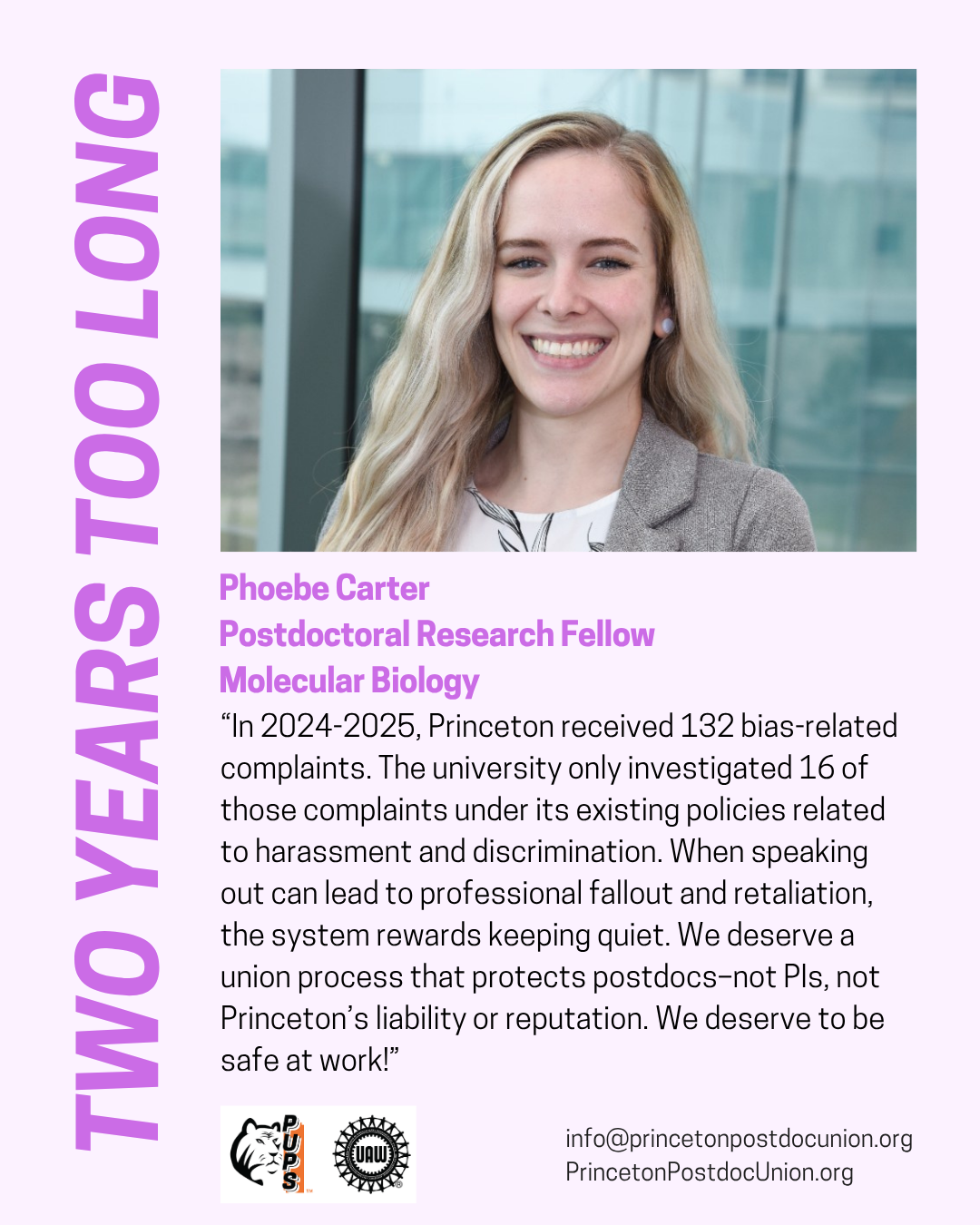
A landmark National Academies report documented the prevalence of sexual harassment in academic science, engineering, and medicine, finding that academic workers at America’s colleges and universities have a harassment rate second only to the military. Unfortunately, harassment and discrimination on the basis of gender and other protected categories is a widespread reality, one that many Princeton Postdocs and Scholars have faced in our workplace.
Postdocs and Scholars work on short-term, temporary contracts, in positions where developing a strong and productive relationship with our supervisors is crucial for our long-term career success. More than half of us are also working on visas on year-to-year contracts, hoping that our appointment will be renewed so that we can remain in the country. These conditions are unfortunately ripe for power abuse, and we need strong protections to ensure recourse in cases where harassment or discrimination occurs.
The University’s current reporting process for issues of workplace discrimination and harassment consistently fails Postdocs and Scholars experiencing abusive conduct. Princeton’s existing processes are not only lengthy and onerous, but rarely result in sufficient remedies. We need a neutral process enforceable through our union contract that can ensure employees experiencing harassing or discriminatory behavior are able to seek safe working conditions quickly and efficiently.
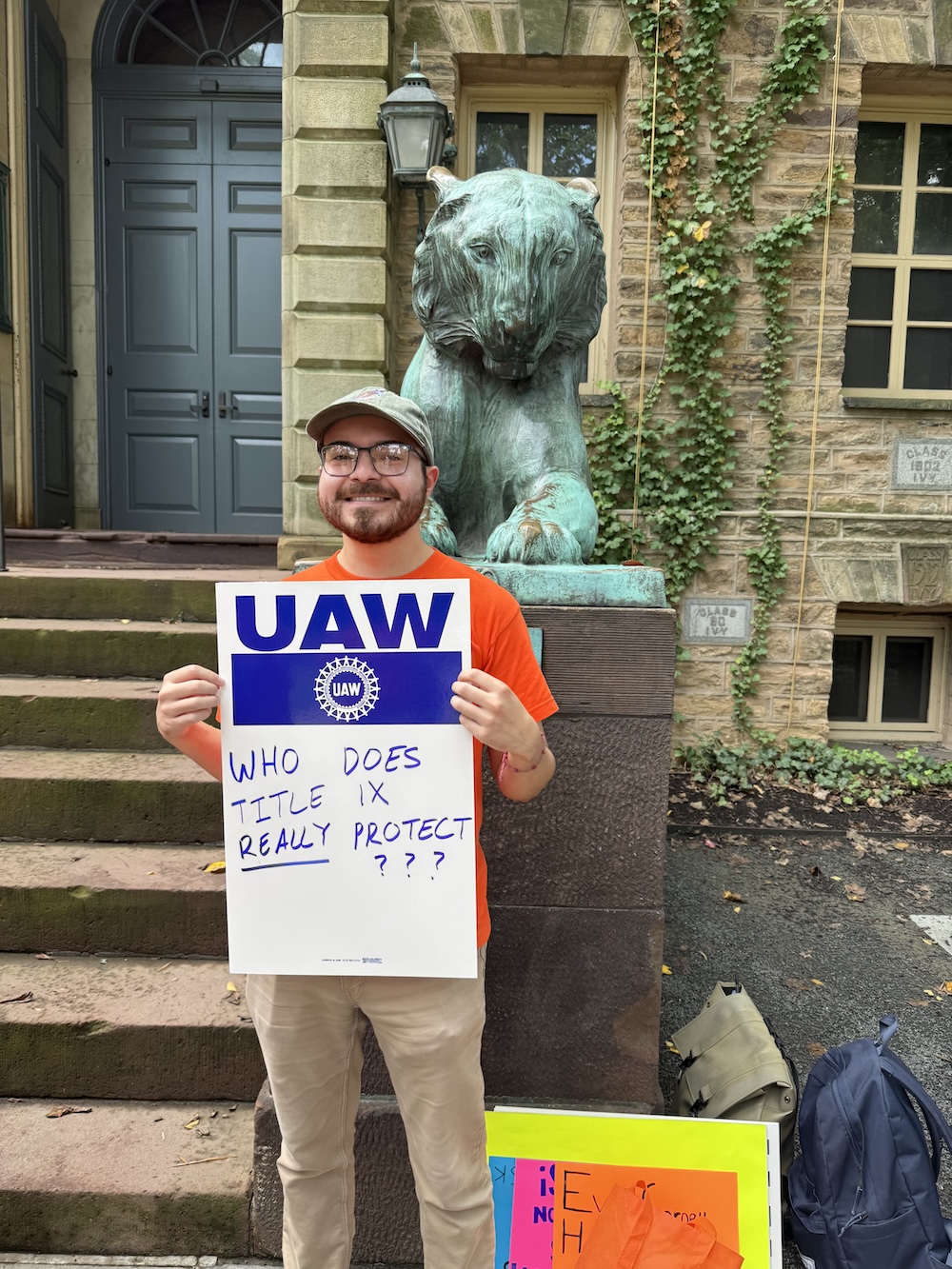
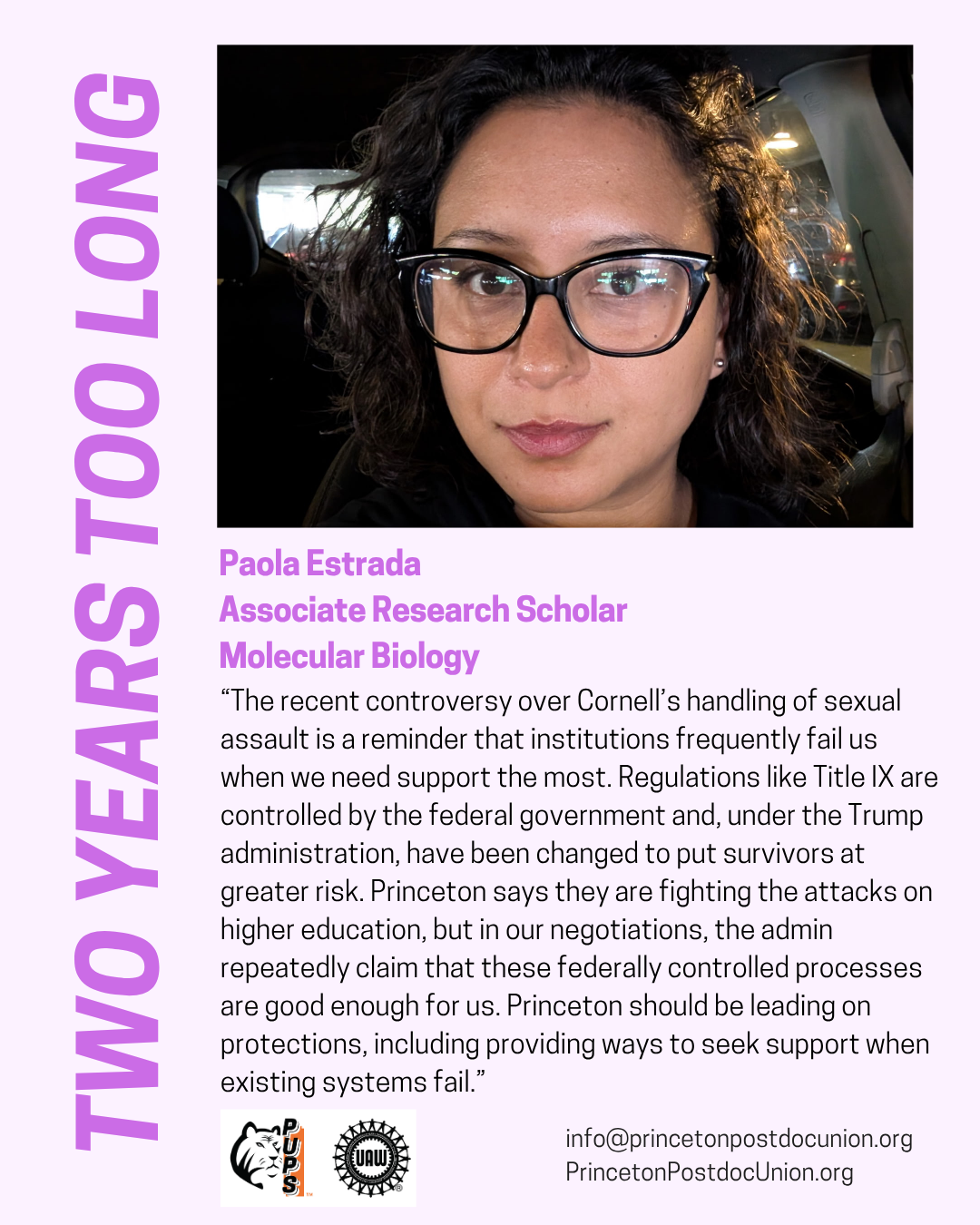
The Princeton administration claims that Title IX and other existing university processes are adequate for addressing instances of harassment and discrimination that we experience. However, the Title IX office is subject to legal regulations defined by the federal government that limit its ability to respond effectively, in many cases leaving survivors unprotected. Title IX regulations are subject to change and currently offer weaker protections than ever before. In September of this year, the Trump administration significantly rolled back protections for survivors, reinstating 2020 regulations that raise the evidentiary standards and procedural requirements for campus sexual assault investigations. During the first 20 months of President Trump’s second term in office, the Department of Education, which investigates discrimination complaints in schools, has resolved only one case. The Title IX process is broken, and Postdocs and Scholars at Princeton need stronger protections.
Our proposal is compatible with Princeton’s existing policies and seeks to strengthen and extend the values of equity and inclusion that Princeton stands for. We are fighting for a contract that offers Postdocs and Scholars a clear path forward for navigating discrimination and harassment.

Frequently Asked Questions:
Your Title Goes Here
Your content goes here. Edit or remove this text inline or in the module Content settings. You can also style every aspect of this content in the module Design settings and even apply custom CSS to this text in the module Advanced settings.
Why do Princeton Postdocs and Scholars want a grievance process?
While Princeton may offer supportive measures for Postdocs and Scholars who report sexual misconduct, the supportive measures are determined at the sole discretion of the university, may be denied, and there is no timeline which dictates how quickly the university may implement supportive measures. For workers who experience discrimination, bullying, or abuse that is not sexual misconduct, existing processes are often both lengthy and onerous for Postdocs and Scholars, rarely resulting in quick or sufficient remedies.
A grievance process allows a worker to think through and request supportive measures themselves. It also guarantees timely meetings and responses. Finally, the grievance process ends with a neutral third-party who makes the final decision in cases where the University dismisses the grievance and denies remedies.
What kind of solutions can be reached through the grievance process?
The remedies we can request in the grievance process are often called “supportive measures.” These remedies are non-punitive measures designed to restore or preserve an employee’s ability to work. These might include adjusting a worker’s office location or work assignment, or establishing terms for communication.
Do I have to choose between filing a complaint with the Title IX office or filing a grievance?
No. We are fighting for the right of an employee to be able to choose either or both. The grievance process can provide non-punitive, supportive measures to an employee. If you are looking to open a formal investigation that may lead to discipline, sanction, or other punitive measures, Title IX may be the right choice for you.
Do other Postdoc and Scholar union contracts have grievable protections against harassment and discrimination?
Yes. Protections against harassment and discrimination are a common feature of union contracts and a standard workplace right. In fact, employers are legally obligated to bargain over how to handle instances of workplace discrimination. Here are some examples of institutions and union contracts that have this process:
Is it illegal to use a grievance procedure to access supportive measures rather than or in addition to going through a Title IX office or coordinator?
No. It is completely legal for academic unions to provide workers with the option to use a grievance process or go through a Title IX office or coordinator, or even pursue both. A grievance process would result in what are often called “supportive measures,” and under Title IX, a compliant has a right to pursue such measures with or without the filing of a formal complaint (§ 106.30).